Chris Strandt
The most dangerous phrase in any organization is “that’s not my job.” The most powerful phrase is “I’ll figure it out.”
I see systems, figure out how they work, and build or improve them - whether the system is a network, a data center, a company, a cloud platform, an embedded device, or a diesel engine. That is not abstract philosophy. It is the instinct to understand how parts connect, where the bottlenecks are, and what happens when you change one piece. This is the lens through which every career chapter makes sense.
Most people specialize. This career went wide on purpose. Not because of indecision, but because every new domain was a new system to understand. Networking taught infrastructure thinking. Infrastructure taught operations. Operations taught leadership. Leadership taught product. Product required going back to hardware. Each chapter was not a pivot - it was a build.
Today, all of that adds up to someone who can solder a circuit board on Monday, review a vendor contract on Tuesday, debug a C++ memory leak on Wednesday, design a mechanical part in CAD on Thursday, and recruit and onboard a new team member on Friday. Not because those skills are random, but because building real things requires all of them.

It started with taking things apart. PCs at Northville Public Schools - DOS machines, early Windows, Novell NetWare servers. Doing sysadmin work for the school district, the job was ostensibly to keep machines running. But the real education was learning that a school network is a system: hardware, software, cabling, protocols, and users who will break everything you build. Ran Ethernet cable through ceilings. Ghost-imaged labs via multicast. Built a BASIC program that rendered 3D geometry. This was not a career plan - it was compulsive curiosity about how things work.
That curiosity led to Merit Networks at the University of Michigan - the organization that connected every university, municipality, and library network in the state. Now the system was not a school building but an entire state. Cisco routers, circuit diagnostics, Sun Solaris consoles. Working the NOC meant understanding that when a circuit goes down, it is not just a blinking light - it is a library in the UP that loses internet, or a school district that loses connectivity. Systems have consequences. That lesson never left.
A brief but formative stint at Innoveda, deploying CAD/CAE software at Ford Motor Company. Wire harness design software - schematics through to manufacturing data. First exposure to the intersection of software and physical engineering. First time seeing how software becomes a physical product.
Liquid Web is the chapter that contains all the others. Hired as the seventh employee to do network engineering. Over thirteen years, did literally everything: designed and built networks from scratch, wrote PHP tools and internal platforms, constructed three data centers, recruited hundreds of people, built teams and management structures, negotiated vendor contracts, developed processes for a company that had none, and ultimately served as COO of 450 employees through a $225 million sale to Madison Dearborn Partners. The system was a company - and building a company means building every subsystem inside it.
Power Gauge Pro is the ultimate expression of the pattern. An aftermarket automotive digital dash - not just the embedded device (NXP iMX8MP, custom carrier board, C++/QT6 on Yocto Linux), but the entire ecosystem: ESP32 accessory modules, a PHP/Laravel/React online marketplace, PCB design, mechanical enclosure design in Fusion 360, manufacturing coordination. Every domain from every previous chapter converges. This is what it looks like when a career that appears scattered is actually accumulating toward something specific.
Comfort at Any Altitude
From soldering surface-mount components under a microscope to presenting due diligence findings to a private equity acquisition team. Most people live at one level of abstraction. This career has required operating at all of them - and switching between them in the same week. Having real depth across the stack means understanding how decisions at one level affect every other level.
Deep Understanding Over Abstraction
A bias toward understanding how things actually work, not just how to use them. When the data center needed power, that meant learning three-phase electrical calculations, harmonic distortion, generator synchronization, and battery chemistry. When the product needed CAN bus communication, that meant understanding differential signaling, arbitration, and DBC file parsing. This depth makes it possible to solve problems others cannot see.
Teams & Processes
Technology does not ship products. People do, using processes. Growing a company from 7 to 450 people means building recruiting pipelines, onboarding programs, management structures, documentation systems, change management processes, and a culture that retains talent. The same systems-thinking lens applies: understand the current state, identify the bottleneck, build the improvement, measure, iterate.
The same curiosity that drives the professional work shows up everywhere else. The shop has a MIG welder, TIG welder, 3D printer, CNC mill, and CO2 laser. The garage has had diesel engines torn down to the block. The backyard has a 30x56 pole barn designed in CAD and built from scratch. The camera comes out for star photography.
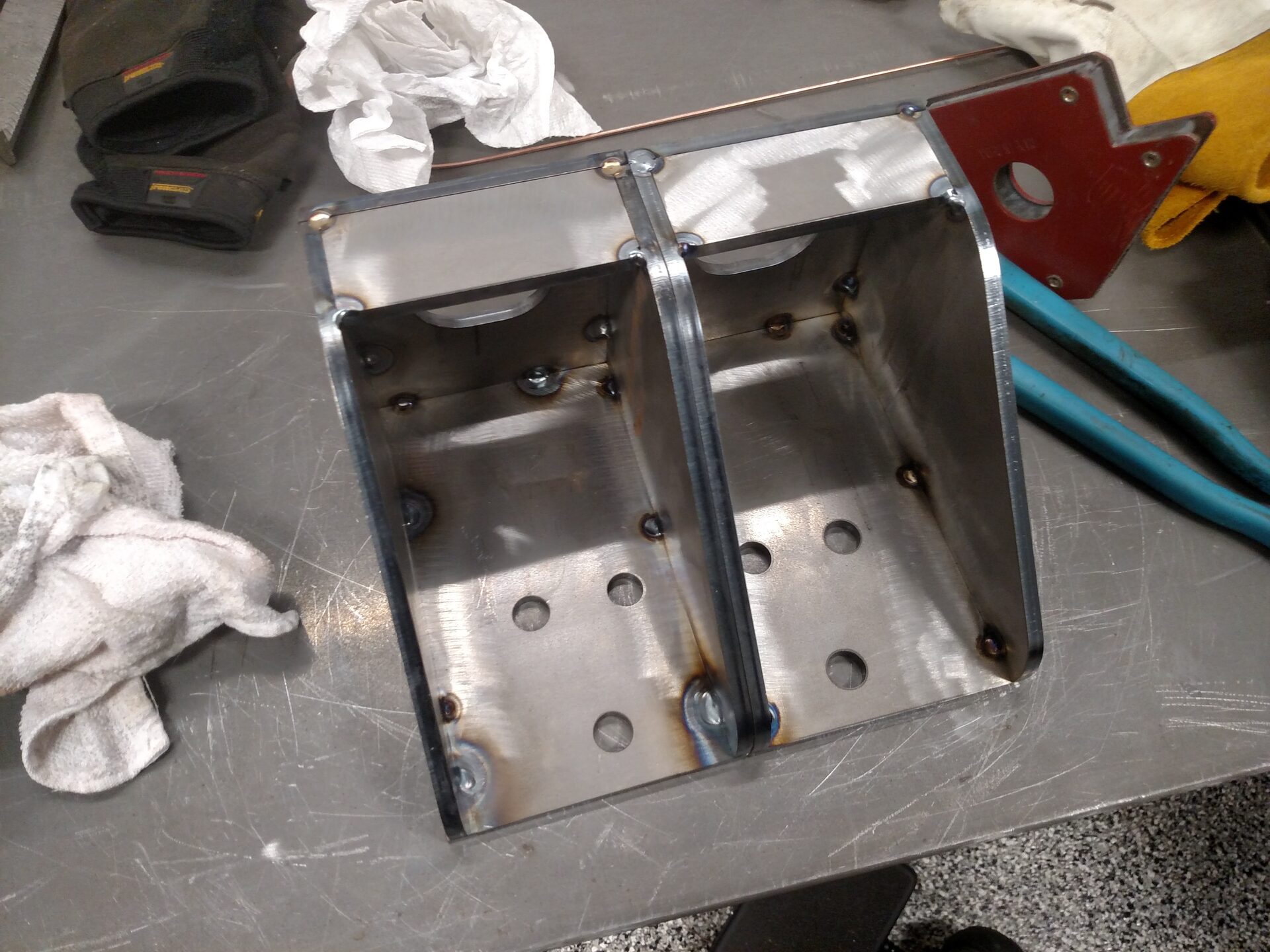
Automotive & Fabrication
Rebuilt diesel engines. Designed electric-over-hydraulic rear steer. Self-taught MIG and TIG welding in steel, aluminum, and stainless. Fusion 360 for design, CNC mill and 3D printer for parts.

Travel & Adventure
Visited all 50 states. Epic Alaska camping road trip with outfitted 4Runners - thousands of miles of gravel, river crossings, and starlight.
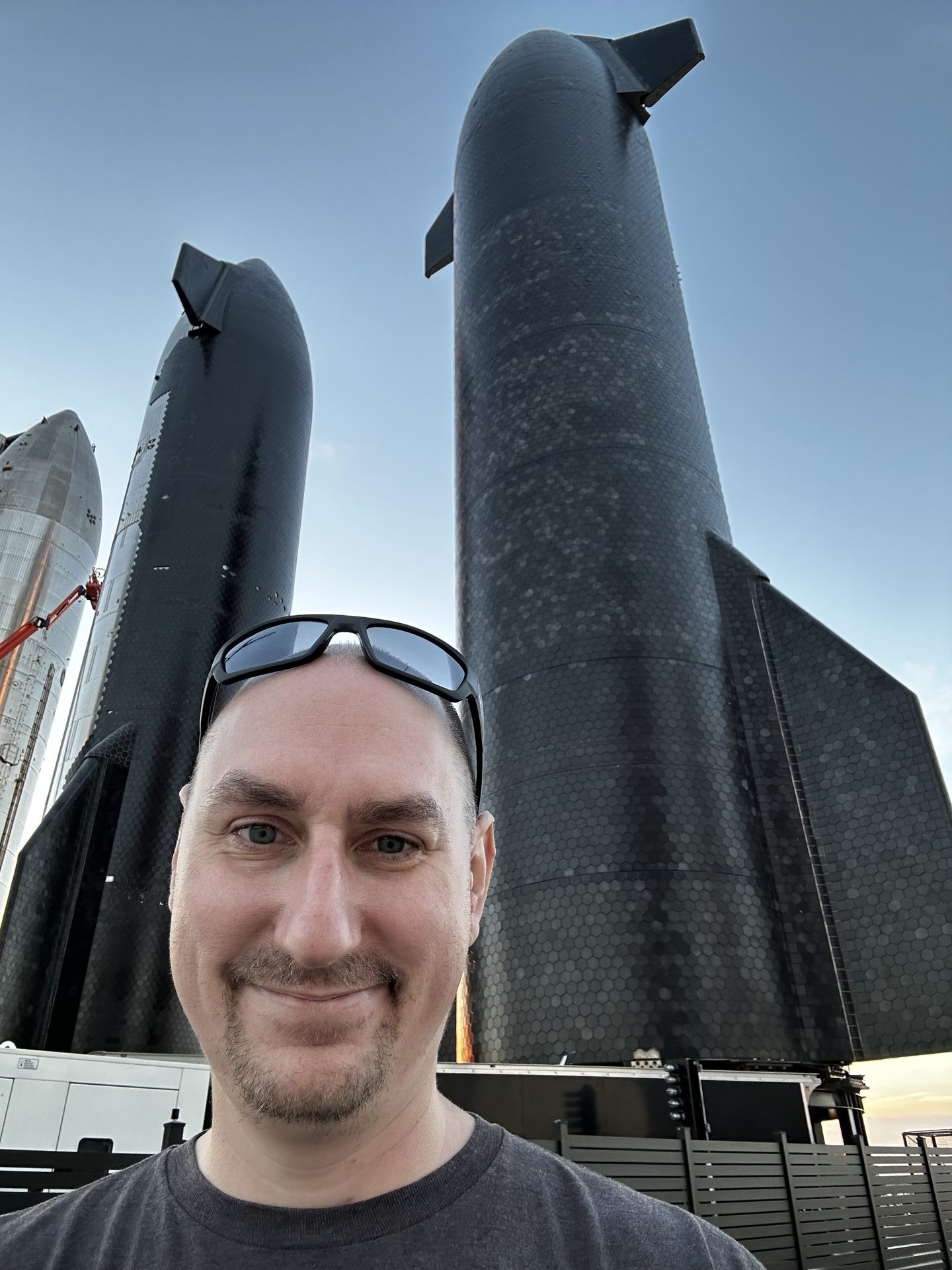
Space
NASA, SpaceX, Blue Origin - following the return of human spaceflight with the enthusiasm of a kid watching shuttle launches.

Photography
Night star photography and landscapes. Capturing the night sky requires the same patience and technical precision as any engineering project.
These interests are not separate from the work - they are the same instinct applied to different materials. See more in Projects →